A repeatable workflow beats a lucky profile
PLA is forgiving enough for beginners but detailed enough to expose weak habits. Reliable prints come from controlling the variables that matter, recording what changed, and checking the first minutes of a job before spending hours on it. This guide covers the complete path from spool storage to customer handoff.
Start With A Clean Machine

When planning start with a clean machine, the useful question is not simply whether a printer can produce the part. It is whether the chosen process, material, geometry, and finish match the job the part must perform. Reliable PLA begins before the file is sliced: a clean nozzle, clear build surface, and known filament path remove avoidable variables. For a custom 3D print, this is also the information that turns a vague request into a clear quote: the cleaning step, the surface type, and the last calibration that was completed.
When planning start with a clean machine, the useful question is not simply whether a printer can produce the part. It is whether the chosen process, material, geometry, and finish match the job the part must perform. A useful technician's habit is to change one variable, print a small test, and write down the outcome. Reliable PLA begins before the file is sliced: a clean nozzle, clear build surface, and known filament path remove avoidable variables. For a custom 3D print, this is also the information that turns a vague request into a clear quote: the setting under test, the observable symptom, and the acceptance rule for moving on.
When planning start with a clean machine, the useful question is not simply whether a printer can produce the part. It is whether the chosen process, material, geometry, and finish match the job the part must perform. This also matters when a print is being made for someone else. Reliable PLA begins before the file is sliced: a clean nozzle, clear build surface, and known filament path remove avoidable variables. The customer should receive a result that is consistent with the approved specification, not an unexplained experiment. For a custom 3D print, this is also the information that turns a vague request into a clear quote: the expected effect on quality, weight, time, or total price before the job is approved.
Dry Filament

When planning dry filament, the useful question is not simply whether a printer can produce the part. It is whether the chosen process, material, geometry, and finish match the job the part must perform. PLA absorbs less moisture than some materials, but damp storage can still produce popping, rough walls, stringing, and inconsistent extrusion. For a custom 3D print, this is also the information that turns a vague request into a clear quote: how the spool was stored and whether a short drying cycle is warranted before production.
When planning dry filament, the useful question is not simply whether a printer can produce the part. It is whether the chosen process, material, geometry, and finish match the job the part must perform. A useful technician's habit is to change one variable, print a small test, and write down the outcome. PLA absorbs less moisture than some materials, but damp storage can still produce popping, rough walls, stringing, and inconsistent extrusion. For a custom 3D print, this is also the information that turns a vague request into a clear quote: the setting under test, the observable symptom, and the acceptance rule for moving on.
When planning dry filament, the useful question is not simply whether a printer can produce the part. It is whether the chosen process, material, geometry, and finish match the job the part must perform. This also matters when a print is being made for someone else. PLA absorbs less moisture than some materials, but damp storage can still produce popping, rough walls, stringing, and inconsistent extrusion. The customer should receive a result that is consistent with the approved specification, not an unexplained experiment. For a custom 3D print, this is also the information that turns a vague request into a clear quote: the expected effect on quality, weight, time, or total price before the job is approved.
First-Layer Calibration
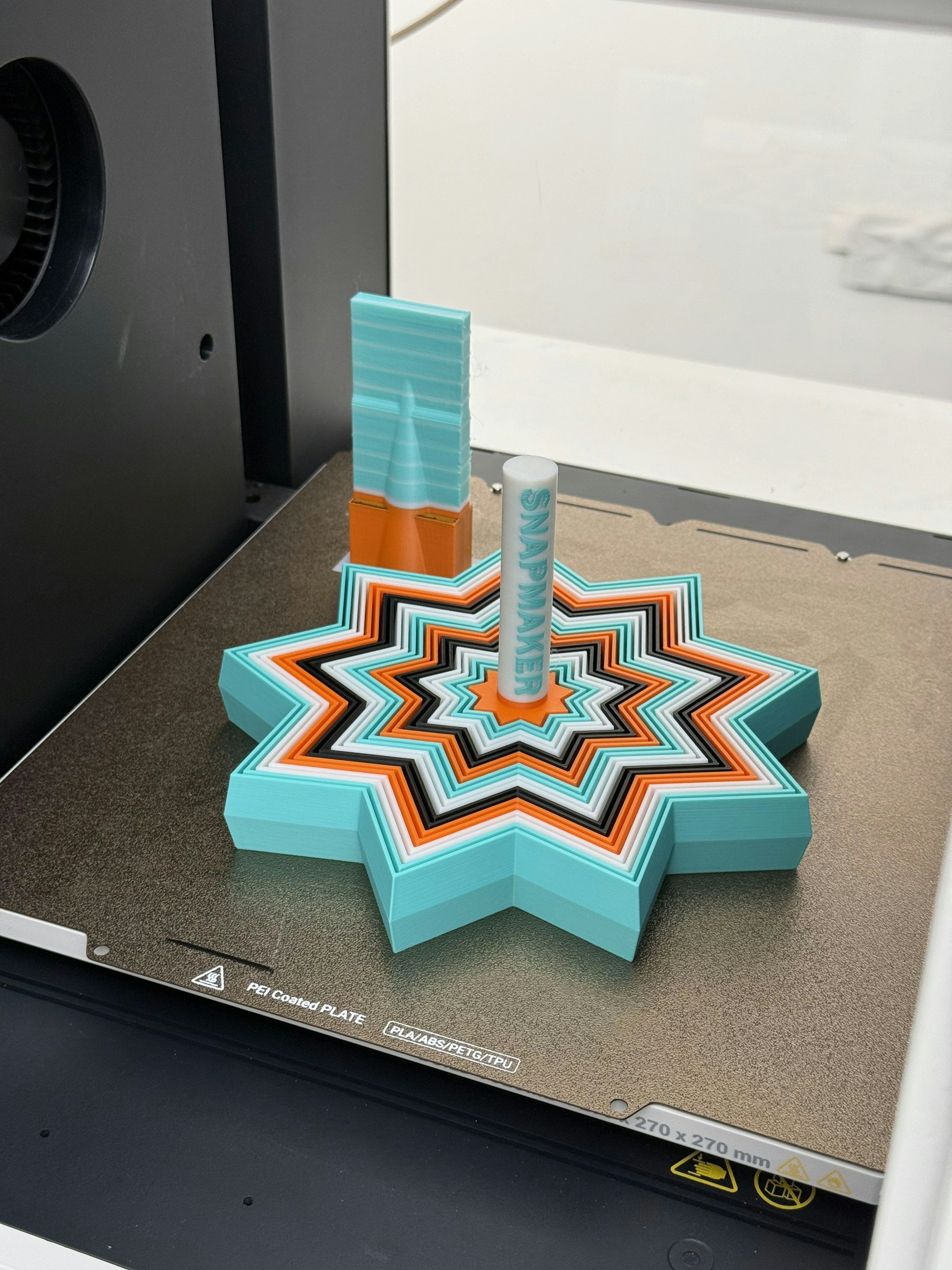
When planning first-layer calibration, the useful question is not simply whether a printer can produce the part. It is whether the chosen process, material, geometry, and finish match the job the part must perform. A good first layer is neither a loose row of strings nor a completely flattened smear. It is a repeatable bond with consistent line shape. For a custom 3D print, this is also the information that turns a vague request into a clear quote: the observed line width, nozzle height adjustment, and the surface condition.
When planning first-layer calibration, the useful question is not simply whether a printer can produce the part. It is whether the chosen process, material, geometry, and finish match the job the part must perform. A useful technician's habit is to change one variable, print a small test, and write down the outcome. A good first layer is neither a loose row of strings nor a completely flattened smear. It is a repeatable bond with consistent line shape. For a custom 3D print, this is also the information that turns a vague request into a clear quote: the setting under test, the observable symptom, and the acceptance rule for moving on.
When planning first-layer calibration, the useful question is not simply whether a printer can produce the part. It is whether the chosen process, material, geometry, and finish match the job the part must perform. This also matters when a print is being made for someone else. A good first layer is neither a loose row of strings nor a completely flattened smear. It is a repeatable bond with consistent line shape. The customer should receive a result that is consistent with the approved specification, not an unexplained experiment. For a custom 3D print, this is also the information that turns a vague request into a clear quote: the expected effect on quality, weight, time, or total price before the job is approved.
Nozzle Temperature
When planning nozzle temperature, the useful question is not simply whether a printer can produce the part. It is whether the chosen process, material, geometry, and finish match the job the part must perform. Temperature changes flow, layer bonding, shine, stringing, and bridging. The best value is a tested range, not a universal number. For a custom 3D print, this is also the information that turns a vague request into a clear quote: the filament manufacturer range, printer hardware, speed, and the visual result of a small temperature test.
When planning nozzle temperature, the useful question is not simply whether a printer can produce the part. It is whether the chosen process, material, geometry, and finish match the job the part must perform. A useful technician's habit is to change one variable, print a small test, and write down the outcome. Temperature changes flow, layer bonding, shine, stringing, and bridging. The best value is a tested range, not a universal number. For a custom 3D print, this is also the information that turns a vague request into a clear quote: the setting under test, the observable symptom, and the acceptance rule for moving on.
When planning nozzle temperature, the useful question is not simply whether a printer can produce the part. It is whether the chosen process, material, geometry, and finish match the job the part must perform. This also matters when a print is being made for someone else. Temperature changes flow, layer bonding, shine, stringing, and bridging. The best value is a tested range, not a universal number. The customer should receive a result that is consistent with the approved specification, not an unexplained experiment. For a custom 3D print, this is also the information that turns a vague request into a clear quote: the expected effect on quality, weight, time, or total price before the job is approved.
Bed Temperature
When planning bed temperature, the useful question is not simply whether a printer can produce the part. It is whether the chosen process, material, geometry, and finish match the job the part must perform. A warm build surface can improve adhesion, but excessive heat can soften the bottom edge or make small parts difficult to remove. For a custom 3D print, this is also the information that turns a vague request into a clear quote: the build surface, ambient conditions, part footprint, and whether the first layer is staying flat.
When planning bed temperature, the useful question is not simply whether a printer can produce the part. It is whether the chosen process, material, geometry, and finish match the job the part must perform. A useful technician's habit is to change one variable, print a small test, and write down the outcome. A warm build surface can improve adhesion, but excessive heat can soften the bottom edge or make small parts difficult to remove. For a custom 3D print, this is also the information that turns a vague request into a clear quote: the setting under test, the observable symptom, and the acceptance rule for moving on.
When planning bed temperature, the useful question is not simply whether a printer can produce the part. It is whether the chosen process, material, geometry, and finish match the job the part must perform. This also matters when a print is being made for someone else. A warm build surface can improve adhesion, but excessive heat can soften the bottom edge or make small parts difficult to remove. The customer should receive a result that is consistent with the approved specification, not an unexplained experiment. For a custom 3D print, this is also the information that turns a vague request into a clear quote: the expected effect on quality, weight, time, or total price before the job is approved.
Layer Height
When planning layer height, the useful question is not simply whether a printer can produce the part. It is whether the chosen process, material, geometry, and finish match the job the part must perform. Layer height is a tradeoff between detail, surface texture, print time, and the number of opportunities for a layer to fail. For a custom 3D print, this is also the information that turns a vague request into a clear quote: the visible detail, functional tolerance, and whether the customer values speed or a smoother surface.
When planning layer height, the useful question is not simply whether a printer can produce the part. It is whether the chosen process, material, geometry, and finish match the job the part must perform. A useful technician's habit is to change one variable, print a small test, and write down the outcome. Layer height is a tradeoff between detail, surface texture, print time, and the number of opportunities for a layer to fail. For a custom 3D print, this is also the information that turns a vague request into a clear quote: the setting under test, the observable symptom, and the acceptance rule for moving on.
When planning layer height, the useful question is not simply whether a printer can produce the part. It is whether the chosen process, material, geometry, and finish match the job the part must perform. This also matters when a print is being made for someone else. Layer height is a tradeoff between detail, surface texture, print time, and the number of opportunities for a layer to fail. The customer should receive a result that is consistent with the approved specification, not an unexplained experiment. For a custom 3D print, this is also the information that turns a vague request into a clear quote: the expected effect on quality, weight, time, or total price before the job is approved.
Line Width
When planning line width, the useful question is not simply whether a printer can produce the part. It is whether the chosen process, material, geometry, and finish match the job the part must perform. A sensible line width can improve wall strength and reduce unnecessary passes, while extreme values may create gaps or poor corners. For a custom 3D print, this is also the information that turns a vague request into a clear quote: the nozzle diameter, wall count, feature size, and the slicer's extrusion behavior.
When planning line width, the useful question is not simply whether a printer can produce the part. It is whether the chosen process, material, geometry, and finish match the job the part must perform. A useful technician's habit is to change one variable, print a small test, and write down the outcome. A sensible line width can improve wall strength and reduce unnecessary passes, while extreme values may create gaps or poor corners. For a custom 3D print, this is also the information that turns a vague request into a clear quote: the setting under test, the observable symptom, and the acceptance rule for moving on.
When planning line width, the useful question is not simply whether a printer can produce the part. It is whether the chosen process, material, geometry, and finish match the job the part must perform. This also matters when a print is being made for someone else. A sensible line width can improve wall strength and reduce unnecessary passes, while extreme values may create gaps or poor corners. The customer should receive a result that is consistent with the approved specification, not an unexplained experiment. For a custom 3D print, this is also the information that turns a vague request into a clear quote: the expected effect on quality, weight, time, or total price before the job is approved.
Perimeters And Top Layers
When planning perimeters and top layers, the useful question is not simply whether a printer can produce the part. It is whether the chosen process, material, geometry, and finish match the job the part must perform. Perimeters form the outside of the part and top layers close its surfaces. They often matter more than a large infill percentage. For a custom 3D print, this is also the information that turns a vague request into a clear quote: the load direction, visible surfaces, and whether the part needs a solid-looking top.
When planning perimeters and top layers, the useful question is not simply whether a printer can produce the part. It is whether the chosen process, material, geometry, and finish match the job the part must perform. A useful technician's habit is to change one variable, print a small test, and write down the outcome. Perimeters form the outside of the part and top layers close its surfaces. They often matter more than a large infill percentage. For a custom 3D print, this is also the information that turns a vague request into a clear quote: the setting under test, the observable symptom, and the acceptance rule for moving on.
When planning perimeters and top layers, the useful question is not simply whether a printer can produce the part. It is whether the chosen process, material, geometry, and finish match the job the part must perform. This also matters when a print is being made for someone else. Perimeters form the outside of the part and top layers close its surfaces. They often matter more than a large infill percentage. The customer should receive a result that is consistent with the approved specification, not an unexplained experiment. For a custom 3D print, this is also the information that turns a vague request into a clear quote: the expected effect on quality, weight, time, or total price before the job is approved.
Infill
When planning infill, the useful question is not simply whether a printer can produce the part. It is whether the chosen process, material, geometry, and finish match the job the part must perform. Infill supports the shell and affects weight, stiffness, print time, and material use. It should serve the part rather than be chosen by habit. For a custom 3D print, this is also the information that turns a vague request into a clear quote: the expected load and whether the model's walls already provide enough strength.
When planning infill, the useful question is not simply whether a printer can produce the part. It is whether the chosen process, material, geometry, and finish match the job the part must perform. A useful technician's habit is to change one variable, print a small test, and write down the outcome. Infill supports the shell and affects weight, stiffness, print time, and material use. It should serve the part rather than be chosen by habit. For a custom 3D print, this is also the information that turns a vague request into a clear quote: the setting under test, the observable symptom, and the acceptance rule for moving on.
When planning infill, the useful question is not simply whether a printer can produce the part. It is whether the chosen process, material, geometry, and finish match the job the part must perform. This also matters when a print is being made for someone else. Infill supports the shell and affects weight, stiffness, print time, and material use. It should serve the part rather than be chosen by habit. The customer should receive a result that is consistent with the approved specification, not an unexplained experiment. For a custom 3D print, this is also the information that turns a vague request into a clear quote: the expected effect on quality, weight, time, or total price before the job is approved.
Cooling
When planning cooling, the useful question is not simply whether a printer can produce the part. It is whether the chosen process, material, geometry, and finish match the job the part must perform. Cooling helps bridges and overhangs but can weaken layer bonding when it is excessive or introduced too quickly. For a custom 3D print, this is also the information that turns a vague request into a clear quote: the geometry, layer time, material color, and the balance between detail and interlayer strength.
When planning cooling, the useful question is not simply whether a printer can produce the part. It is whether the chosen process, material, geometry, and finish match the job the part must perform. A useful technician's habit is to change one variable, print a small test, and write down the outcome. Cooling helps bridges and overhangs but can weaken layer bonding when it is excessive or introduced too quickly. For a custom 3D print, this is also the information that turns a vague request into a clear quote: the setting under test, the observable symptom, and the acceptance rule for moving on.
When planning cooling, the useful question is not simply whether a printer can produce the part. It is whether the chosen process, material, geometry, and finish match the job the part must perform. This also matters when a print is being made for someone else. Cooling helps bridges and overhangs but can weaken layer bonding when it is excessive or introduced too quickly. The customer should receive a result that is consistent with the approved specification, not an unexplained experiment. For a custom 3D print, this is also the information that turns a vague request into a clear quote: the expected effect on quality, weight, time, or total price before the job is approved.
Print Speed
When planning print speed, the useful question is not simply whether a printer can produce the part. It is whether the chosen process, material, geometry, and finish match the job the part must perform. Speed is not a single setting. Outer walls, inner walls, infill, travel, and first-layer speed each influence reliability differently. For a custom 3D print, this is also the information that turns a vague request into a clear quote: which surfaces must look good and which portions can be printed faster without affecting the result.
When planning print speed, the useful question is not simply whether a printer can produce the part. It is whether the chosen process, material, geometry, and finish match the job the part must perform. A useful technician's habit is to change one variable, print a small test, and write down the outcome. Speed is not a single setting. Outer walls, inner walls, infill, travel, and first-layer speed each influence reliability differently. For a custom 3D print, this is also the information that turns a vague request into a clear quote: the setting under test, the observable symptom, and the acceptance rule for moving on.
When planning print speed, the useful question is not simply whether a printer can produce the part. It is whether the chosen process, material, geometry, and finish match the job the part must perform. This also matters when a print is being made for someone else. Speed is not a single setting. Outer walls, inner walls, infill, travel, and first-layer speed each influence reliability differently. The customer should receive a result that is consistent with the approved specification, not an unexplained experiment. For a custom 3D print, this is also the information that turns a vague request into a clear quote: the expected effect on quality, weight, time, or total price before the job is approved.
Retraction And Stringing
When planning retraction and stringing, the useful question is not simply whether a printer can produce the part. It is whether the chosen process, material, geometry, and finish match the job the part must perform. Stringing can come from temperature, retraction, travel path, wet filament, or a combination of small factors. For a custom 3D print, this is also the information that turns a vague request into a clear quote: a controlled test and one change at a time instead of stacking random slicer adjustments.
When planning retraction and stringing, the useful question is not simply whether a printer can produce the part. It is whether the chosen process, material, geometry, and finish match the job the part must perform. A useful technician's habit is to change one variable, print a small test, and write down the outcome. Stringing can come from temperature, retraction, travel path, wet filament, or a combination of small factors. For a custom 3D print, this is also the information that turns a vague request into a clear quote: the setting under test, the observable symptom, and the acceptance rule for moving on.
When planning retraction and stringing, the useful question is not simply whether a printer can produce the part. It is whether the chosen process, material, geometry, and finish match the job the part must perform. This also matters when a print is being made for someone else. Stringing can come from temperature, retraction, travel path, wet filament, or a combination of small factors. The customer should receive a result that is consistent with the approved specification, not an unexplained experiment. For a custom 3D print, this is also the information that turns a vague request into a clear quote: the expected effect on quality, weight, time, or total price before the job is approved.
Bridges And Overhangs
When planning bridges and overhangs, the useful question is not simply whether a printer can produce the part. It is whether the chosen process, material, geometry, and finish match the job the part must perform. Bridge length, cooling, speed, and orientation all affect whether unsupported spans remain clean. For a custom 3D print, this is also the information that turns a vague request into a clear quote: the longest bridge, the critical overhang angle, and whether a small support is cheaper than repeated failure.
When planning bridges and overhangs, the useful question is not simply whether a printer can produce the part. It is whether the chosen process, material, geometry, and finish match the job the part must perform. A useful technician's habit is to change one variable, print a small test, and write down the outcome. Bridge length, cooling, speed, and orientation all affect whether unsupported spans remain clean. For a custom 3D print, this is also the information that turns a vague request into a clear quote: the setting under test, the observable symptom, and the acceptance rule for moving on.
When planning bridges and overhangs, the useful question is not simply whether a printer can produce the part. It is whether the chosen process, material, geometry, and finish match the job the part must perform. This also matters when a print is being made for someone else. Bridge length, cooling, speed, and orientation all affect whether unsupported spans remain clean. The customer should receive a result that is consistent with the approved specification, not an unexplained experiment. For a custom 3D print, this is also the information that turns a vague request into a clear quote: the expected effect on quality, weight, time, or total price before the job is approved.
Supports
When planning supports, the useful question is not simply whether a printer can produce the part. It is whether the chosen process, material, geometry, and finish match the job the part must perform. Supports should be easy to remove while preserving the visible surface. Their interface settings can change both finish and print time. For a custom 3D print, this is also the information that turns a vague request into a clear quote: where support scars are acceptable and whether the model can be rotated to reduce them.
When planning supports, the useful question is not simply whether a printer can produce the part. It is whether the chosen process, material, geometry, and finish match the job the part must perform. A useful technician's habit is to change one variable, print a small test, and write down the outcome. Supports should be easy to remove while preserving the visible surface. Their interface settings can change both finish and print time. For a custom 3D print, this is also the information that turns a vague request into a clear quote: the setting under test, the observable symptom, and the acceptance rule for moving on.
When planning supports, the useful question is not simply whether a printer can produce the part. It is whether the chosen process, material, geometry, and finish match the job the part must perform. This also matters when a print is being made for someone else. Supports should be easy to remove while preserving the visible surface. Their interface settings can change both finish and print time. The customer should receive a result that is consistent with the approved specification, not an unexplained experiment. For a custom 3D print, this is also the information that turns a vague request into a clear quote: the expected effect on quality, weight, time, or total price before the job is approved.
Seams
When planning seams, the useful question is not simply whether a printer can produce the part. It is whether the chosen process, material, geometry, and finish match the job the part must perform. The seam is a planned location where each layer starts and ends. Hiding it on a corner or less-visible face can improve appearance. For a custom 3D print, this is also the information that turns a vague request into a clear quote: which side will be displayed and whether a consistent seam is preferable to random marks.
When planning seams, the useful question is not simply whether a printer can produce the part. It is whether the chosen process, material, geometry, and finish match the job the part must perform. A useful technician's habit is to change one variable, print a small test, and write down the outcome. The seam is a planned location where each layer starts and ends. Hiding it on a corner or less-visible face can improve appearance. For a custom 3D print, this is also the information that turns a vague request into a clear quote: the setting under test, the observable symptom, and the acceptance rule for moving on.
When planning seams, the useful question is not simply whether a printer can produce the part. It is whether the chosen process, material, geometry, and finish match the job the part must perform. This also matters when a print is being made for someone else. The seam is a planned location where each layer starts and ends. Hiding it on a corner or less-visible face can improve appearance. The customer should receive a result that is consistent with the approved specification, not an unexplained experiment. For a custom 3D print, this is also the information that turns a vague request into a clear quote: the expected effect on quality, weight, time, or total price before the job is approved.
Elephant Foot
When planning elephant foot, the useful question is not simply whether a printer can produce the part. It is whether the chosen process, material, geometry, and finish match the job the part must perform. A widened first-layer edge can affect fit even when the upper dimensions are correct. For a custom 3D print, this is also the information that turns a vague request into a clear quote: the mating geometry, first-layer compensation, chamfer, and the measurement that matters.
When planning elephant foot, the useful question is not simply whether a printer can produce the part. It is whether the chosen process, material, geometry, and finish match the job the part must perform. A useful technician's habit is to change one variable, print a small test, and write down the outcome. A widened first-layer edge can affect fit even when the upper dimensions are correct. For a custom 3D print, this is also the information that turns a vague request into a clear quote: the setting under test, the observable symptom, and the acceptance rule for moving on.
When planning elephant foot, the useful question is not simply whether a printer can produce the part. It is whether the chosen process, material, geometry, and finish match the job the part must perform. This also matters when a print is being made for someone else. A widened first-layer edge can affect fit even when the upper dimensions are correct. The customer should receive a result that is consistent with the approved specification, not an unexplained experiment. For a custom 3D print, this is also the information that turns a vague request into a clear quote: the expected effect on quality, weight, time, or total price before the job is approved.
Warping Prevention
When planning warping prevention, the useful question is not simply whether a printer can produce the part. It is whether the chosen process, material, geometry, and finish match the job the part must perform. Adhesion, clean surfaces, stable temperatures, orientation, and reduced drafts work together to keep PLA corners flat. For a custom 3D print, this is also the information that turns a vague request into a clear quote: the footprint, room conditions, plate preparation, and whether a brim is justified.
When planning warping prevention, the useful question is not simply whether a printer can produce the part. It is whether the chosen process, material, geometry, and finish match the job the part must perform. A useful technician's habit is to change one variable, print a small test, and write down the outcome. Adhesion, clean surfaces, stable temperatures, orientation, and reduced drafts work together to keep PLA corners flat. For a custom 3D print, this is also the information that turns a vague request into a clear quote: the setting under test, the observable symptom, and the acceptance rule for moving on.
When planning warping prevention, the useful question is not simply whether a printer can produce the part. It is whether the chosen process, material, geometry, and finish match the job the part must perform. This also matters when a print is being made for someone else. Adhesion, clean surfaces, stable temperatures, orientation, and reduced drafts work together to keep PLA corners flat. The customer should receive a result that is consistent with the approved specification, not an unexplained experiment. For a custom 3D print, this is also the information that turns a vague request into a clear quote: the expected effect on quality, weight, time, or total price before the job is approved.
Calibration Without Over-Tuning
When planning calibration without over-tuning, the useful question is not simply whether a printer can produce the part. It is whether the chosen process, material, geometry, and finish match the job the part must perform. Calibration should answer a question. Endless tuning without notes can make a previously reliable profile harder to reproduce. For a custom 3D print, this is also the information that turns a vague request into a clear quote: the symptom, the single variable changed, and the result recorded after the test.
When planning calibration without over-tuning, the useful question is not simply whether a printer can produce the part. It is whether the chosen process, material, geometry, and finish match the job the part must perform. A useful technician's habit is to change one variable, print a small test, and write down the outcome. Calibration should answer a question. Endless tuning without notes can make a previously reliable profile harder to reproduce. For a custom 3D print, this is also the information that turns a vague request into a clear quote: the setting under test, the observable symptom, and the acceptance rule for moving on.
When planning calibration without over-tuning, the useful question is not simply whether a printer can produce the part. It is whether the chosen process, material, geometry, and finish match the job the part must perform. This also matters when a print is being made for someone else. Calibration should answer a question. Endless tuning without notes can make a previously reliable profile harder to reproduce. The customer should receive a result that is consistent with the approved specification, not an unexplained experiment. For a custom 3D print, this is also the information that turns a vague request into a clear quote: the expected effect on quality, weight, time, or total price before the job is approved.
Quality Inspection
When planning quality inspection, the useful question is not simply whether a printer can produce the part. It is whether the chosen process, material, geometry, and finish match the job the part must perform. A finished part should be checked for missing features, poor adhesion, stringing that affects function, rough supports, and dimensional issues. For a custom 3D print, this is also the information that turns a vague request into a clear quote: the inspection points and the standard used to accept or remake the print.
When planning quality inspection, the useful question is not simply whether a printer can produce the part. It is whether the chosen process, material, geometry, and finish match the job the part must perform. A useful technician's habit is to change one variable, print a small test, and write down the outcome. A finished part should be checked for missing features, poor adhesion, stringing that affects function, rough supports, and dimensional issues. For a custom 3D print, this is also the information that turns a vague request into a clear quote: the setting under test, the observable symptom, and the acceptance rule for moving on.
When planning quality inspection, the useful question is not simply whether a printer can produce the part. It is whether the chosen process, material, geometry, and finish match the job the part must perform. This also matters when a print is being made for someone else. A finished part should be checked for missing features, poor adhesion, stringing that affects function, rough supports, and dimensional issues. The customer should receive a result that is consistent with the approved specification, not an unexplained experiment. For a custom 3D print, this is also the information that turns a vague request into a clear quote: the expected effect on quality, weight, time, or total price before the job is approved.
Repeatable Production
When planning repeatable production, the useful question is not simply whether a printer can produce the part. It is whether the chosen process, material, geometry, and finish match the job the part must perform. A repeat order benefits from the same spool family, profile, orientation, and documented inspection routine. For a custom 3D print, this is also the information that turns a vague request into a clear quote: the approved reference print and the settings that produced it.
When planning repeatable production, the useful question is not simply whether a printer can produce the part. It is whether the chosen process, material, geometry, and finish match the job the part must perform. A useful technician's habit is to change one variable, print a small test, and write down the outcome. A repeat order benefits from the same spool family, profile, orientation, and documented inspection routine. For a custom 3D print, this is also the information that turns a vague request into a clear quote: the setting under test, the observable symptom, and the acceptance rule for moving on.
When planning repeatable production, the useful question is not simply whether a printer can produce the part. It is whether the chosen process, material, geometry, and finish match the job the part must perform. This also matters when a print is being made for someone else. A repeat order benefits from the same spool family, profile, orientation, and documented inspection routine. The customer should receive a result that is consistent with the approved specification, not an unexplained experiment. For a custom 3D print, this is also the information that turns a vague request into a clear quote: the expected effect on quality, weight, time, or total price before the job is approved.
Quoting Pla Prints
When planning quoting pla prints, the useful question is not simply whether a printer can produce the part. It is whether the chosen process, material, geometry, and finish match the job the part must perform. The customer-visible quote can remain simple even when the printer workflow is detailed: roll price, estimated grams, estimated time, and total. For a custom 3D print, this is also the information that turns a vague request into a clear quote: the values used in the formula and the assumptions that could change before production.
When planning quoting pla prints, the useful question is not simply whether a printer can produce the part. It is whether the chosen process, material, geometry, and finish match the job the part must perform. A useful technician's habit is to change one variable, print a small test, and write down the outcome. The customer-visible quote can remain simple even when the printer workflow is detailed: roll price, estimated grams, estimated time, and total. For a custom 3D print, this is also the information that turns a vague request into a clear quote: the setting under test, the observable symptom, and the acceptance rule for moving on.
When planning quoting pla prints, the useful question is not simply whether a printer can produce the part. It is whether the chosen process, material, geometry, and finish match the job the part must perform. This also matters when a print is being made for someone else. The customer-visible quote can remain simple even when the printer workflow is detailed: roll price, estimated grams, estimated time, and total. The customer should receive a result that is consistent with the approved specification, not an unexplained experiment. For a custom 3D print, this is also the information that turns a vague request into a clear quote: the expected effect on quality, weight, time, or total price before the job is approved.
Failed Print Decisions
When planning failed print decisions, the useful question is not simply whether a printer can produce the part. It is whether the chosen process, material, geometry, and finish match the job the part must perform. Stopping early can save more material than hoping a visibly failing print will recover. For a custom 3D print, this is also the information that turns a vague request into a clear quote: the failure point, the likely cause, and whether a corrected replacement is the appropriate resolution.
When planning failed print decisions, the useful question is not simply whether a printer can produce the part. It is whether the chosen process, material, geometry, and finish match the job the part must perform. A useful technician's habit is to change one variable, print a small test, and write down the outcome. Stopping early can save more material than hoping a visibly failing print will recover. For a custom 3D print, this is also the information that turns a vague request into a clear quote: the setting under test, the observable symptom, and the acceptance rule for moving on.
When planning failed print decisions, the useful question is not simply whether a printer can produce the part. It is whether the chosen process, material, geometry, and finish match the job the part must perform. This also matters when a print is being made for someone else. Stopping early can save more material than hoping a visibly failing print will recover. The customer should receive a result that is consistent with the approved specification, not an unexplained experiment. For a custom 3D print, this is also the information that turns a vague request into a clear quote: the expected effect on quality, weight, time, or total price before the job is approved.
Printer Maintenance
When planning printer maintenance, the useful question is not simply whether a printer can produce the part. It is whether the chosen process, material, geometry, and finish match the job the part must perform. Belts, rollers, nozzle condition, bed flatness, and extrusion path all influence a supposedly identical PLA profile. For a custom 3D print, this is also the information that turns a vague request into a clear quote: the maintenance note that explains any change from a prior successful job.
When planning printer maintenance, the useful question is not simply whether a printer can produce the part. It is whether the chosen process, material, geometry, and finish match the job the part must perform. A useful technician's habit is to change one variable, print a small test, and write down the outcome. Belts, rollers, nozzle condition, bed flatness, and extrusion path all influence a supposedly identical PLA profile. For a custom 3D print, this is also the information that turns a vague request into a clear quote: the setting under test, the observable symptom, and the acceptance rule for moving on.
When planning printer maintenance, the useful question is not simply whether a printer can produce the part. It is whether the chosen process, material, geometry, and finish match the job the part must perform. This also matters when a print is being made for someone else. Belts, rollers, nozzle condition, bed flatness, and extrusion path all influence a supposedly identical PLA profile. The customer should receive a result that is consistent with the approved specification, not an unexplained experiment. For a custom 3D print, this is also the information that turns a vague request into a clear quote: the expected effect on quality, weight, time, or total price before the job is approved.
Customer Handoff
When planning customer handoff, the useful question is not simply whether a printer can produce the part. It is whether the chosen process, material, geometry, and finish match the job the part must perform. A useful handoff explains what material was used, what finish was selected, and any limitations that matter to handling. For a custom 3D print, this is also the information that turns a vague request into a clear quote: the care instructions and the exact model or revision that was printed.
When planning customer handoff, the useful question is not simply whether a printer can produce the part. It is whether the chosen process, material, geometry, and finish match the job the part must perform. A useful technician's habit is to change one variable, print a small test, and write down the outcome. A useful handoff explains what material was used, what finish was selected, and any limitations that matter to handling. For a custom 3D print, this is also the information that turns a vague request into a clear quote: the setting under test, the observable symptom, and the acceptance rule for moving on.
When planning customer handoff, the useful question is not simply whether a printer can produce the part. It is whether the chosen process, material, geometry, and finish match the job the part must perform. This also matters when a print is being made for someone else. A useful handoff explains what material was used, what finish was selected, and any limitations that matter to handling. The customer should receive a result that is consistent with the approved specification, not an unexplained experiment. For a custom 3D print, this is also the information that turns a vague request into a clear quote: the expected effect on quality, weight, time, or total price before the job is approved.
Making A Pla Workflow Beginner-Friendly
When planning making a pla workflow beginner-friendly, the useful question is not simply whether a printer can produce the part. It is whether the chosen process, material, geometry, and finish match the job the part must perform. The best workflow has a short sequence that can be repeated: inspect, clean, load, calibrate, slice, observe, inspect. For a custom 3D print, this is also the information that turns a vague request into a clear quote: the few checks that prevent the majority of failures without overwhelming a first-time customer.
When planning making a pla workflow beginner-friendly, the useful question is not simply whether a printer can produce the part. It is whether the chosen process, material, geometry, and finish match the job the part must perform. A useful technician's habit is to change one variable, print a small test, and write down the outcome. The best workflow has a short sequence that can be repeated: inspect, clean, load, calibrate, slice, observe, inspect. For a custom 3D print, this is also the information that turns a vague request into a clear quote: the setting under test, the observable symptom, and the acceptance rule for moving on.
When planning making a pla workflow beginner-friendly, the useful question is not simply whether a printer can produce the part. It is whether the chosen process, material, geometry, and finish match the job the part must perform. This also matters when a print is being made for someone else. The best workflow has a short sequence that can be repeated: inspect, clean, load, calibrate, slice, observe, inspect. The customer should receive a result that is consistent with the approved specification, not an unexplained experiment. For a custom 3D print, this is also the information that turns a vague request into a clear quote: the expected effect on quality, weight, time, or total price before the job is approved.
Frequently asked questions
What is the best PLA temperature?
Use the range recommended by the manufacturer, then calibrate for the specific printer, nozzle, speed, and color. A single number is not reliable across every spool and machine.
Why does PLA pop while printing?
Moisture is a common cause, although a restricted path or dirty nozzle can contribute. Dry the spool appropriately, check the path, and observe whether the surface improves.
Why is the first layer thin in some places?
Bed leveling, mesh compensation, a contaminated surface, a warped plate, or inconsistent nozzle height can all contribute. Check the simple physical causes before changing many slicer values.
Does slower always mean better?
No. Slower can improve some surfaces, but too much heat, poor cooling, or a long layer time can create other defects. Tune the setting that matches the observed problem.
How much infill should a part have?
Choose it from the use case and shell design. Many functional parts need better perimeters and orientation more than a dramatic increase in infill.
Can PLA be used for a car interior?
It depends on the temperature and location. A hot vehicle can exceed the comfortable range for ordinary PLA, so the environment should be disclosed before material selection.
What should I do when a print starts failing?
Pause or stop if the defect will affect the result. Record the layer and symptom, correct the likely cause, and restart only after the relevant test has passed.
How do I reduce stringing?
Check moisture, temperature, retraction, travel paths, and nozzle condition in that order. Change one factor at a time so the successful adjustment is repeatable.
How do I get smoother walls?
Use an appropriate layer height, stable extrusion, consistent cooling, sensible speed, and a seam location that does not cross the most visible face.
How do I know a print is ready to ship?
Inspect critical dimensions, adhesion, visible surfaces, support removal, sharp edges, and the requested quantity. Package only after the part matches the approved specification.